


Origin: Guji, Ethiopia
Woreda: Uraga
Farm: Tabe Burka
Species: Arabica
Varieties: 74110, 74112
Process: Natural
Drying: Drying beds
Packaging: 60kg - Jute bags
Altitude: 2330 m.a.s.l.
Harvest Period: November - February
Type Of Harvest: Manual
About this coffee
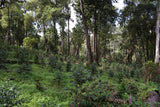
Seated in the Southern Oromia highlands, Guji is characterized by its stunning biodiversity, dense native forests, and exceptionally high elevations, often ranging above 2000 meters. Grown at a staggering 2330 meters above sea level in the Tabe Burka district of Uraga, the cherries benefit from intense sunlight, cool nights, and fertile, organically maintained soil.
The harvest runs from November to February. With meticulous care, farmers and their families selectively handpick only the deeply red, perfectly ripe cherries, which are then sun-dried whole on raised African beds for 15-20 days, a patient process.
Oboleyan works directly with 148 smallholder families in the Uraga district, particularly around the Tabe Burka kebele. "Oboleyan" translates to "brothers" or "siblings" in the Oromo language, a name that perfectly captures its essence. Founded in 2018 by the four Edema brothers (Tariku, Wendimu, Demelash, and Anteneh), the company is a fusion of deep-rooted family legacy and entrepreneurial vision. Their father was a respected figure in Guji's coffee sector, making them a true third-generation coffee family.
Tabe Burka
Uraga coffee is sourced from smallholder farmers whose plots lie within a 10 to 20 km radius of the local washing stations. These stations, managed by private owners, act as central collection points, bringing together cherries from numerous nearby producers.
Situated in the renowned Guji appellation, the Uraga district shares its borders with Odo Shakisso and Hambela, both famous for producing exceptional Guji coffees. Yet, Uraga stands out not only for the quality of its cup but also for the deep-rooted history of coffee cultivation in the area. In fact, coffee growing in Uraga may predates that of its neighboring districts. Among the trees here is a rare varietal producing yellow cherries, known locally as Wallagga, a name that hints at the long journey and origin of these coffee trees.
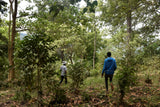
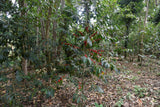
Farming in Uraga follows a traditional polyculture system, where coffee is intercropped with various food crops. A central component of this system is the enset (false banana tree), a plant of immense agronomic and cultural significance. The root of the enset, when pounded and fermented, forms a staple of the local diet. But beyond its nutritional value, enset plays a vital ecological role. It stores water in its trunk, providing a steady source of moisture during dry spells. Its presence amidst the coffee trees helps maintain a stable microclimate, shielding the plants from harsh conditions and supporting year-round vitality.
This unique integration of ecology, tradition, and biodiversity makes Uraga coffee not only distinctive in flavor but also a testament to sustainable, time-honored agricultural practices.
Our packaging is made of 100% recyclable plastic.