


Origin: Colombia
Region: Narino
Harvest Season: 2025-2026
Producer: Small Holder Farmers
Processing: Washed
Species: Arabica
Variety: Castillo, Caturra, Colombia, Maragogype, Pink Bourbon
Flavour Profile: Chocolaty / Nutty
Tasting notes: Milk Chocolate, Almond, Buttery, Apple
About this coffee
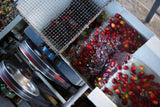
Sourced in collaboration with Azahar Coffee, this first of its kind Slow Food Coffee Coalition Community Lot marries the hard work and dedication of 17 producers from ten municipalities that surround the semi-active Galeras Volcano. These ten towns, nestled on the slopes of the volcano seem to create a ring of scenic, Andean communities with long-lasting, high-altitude coffee-growing traditions.
The region
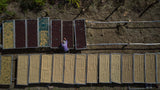
The 17 “Pequeños Productores” live and work across Nariño in the municipalities of El Tambo, Consacá, Chachagüí, Mallama, La Florida, Yacuanquer, Ancuya, Buesaco, Pasto, and Funes, with farms ranging from 1,800 to 2,050 m.a.s.l in elevation. They are seventeen heroes whom are in the process of becoming Slow Food Coffee Coaliton Group starting from the 2025 harvest. We hope to be able to buy coffee from this group each year during the main harvest which in this part of Nariño spans between June and September. They are all smallholder coffee producers with farm ranging from 1 to 10 hectares and they grow and ferment coffee the traditional way for this part of the country, which has been taught down from each generation.
The Producers
The producers who contributed to this blend cultivate coffee and other hardy crops such as sugar cane, corn and potatoes on some of Colombia’s steepest, smallest and hardest-to-reach farms. South-central Nariño is known for its expansive landscape of endless, rolling-green mountains. We work with several partner producers who must walk up to two hours uphill to access their plantings. Although the rural roads and infrastructure in this part of the country are relatively well-maintained and include a long stretch of the Pan American highway, one of, if not, South America’s most important commercial routes, much of Nariño’s towns and municipalities are considerably off the beaten path. Farmers must often travel with their coffee in hired local transport in order to deliver their parchment to Azahar’s Bodega in the capital city of Pasto. A journey which adds to their already high costs of production.